
Church Restoration 168 years
“The Lord has done great things for us, and we are filled with joy.” (Psalm 126:3)
The Restoration of St. Paul’s Church (2022–2026)
Historical Significance The history of St. Paul’s Church spans 168 years, beginning with the laying of its foundation stone on February 9, 1855. Dedicated on September 19, 1858, and officially named St. Paul’s Church on November 18, 1858, the sanctuary has undergone several renovations over the decades. Major milestones include the addition of the choir and vicar rooms in 1926, the installation of electricity in 1933, and a significant centenary renovation between 1955 and 1959, which saw the installation of new flooring and altars.
The Fourth Restoration Project- The current restoration project—the fourth in its history—is a massive undertaking costing approximately Rs. 10 Crores. While initial preparations were begun by Rev. Freedi Baskaran, the project gained significant momentum under the leadership of Rev. S. Samuel after he took charge in June 2022. A new Restoration Committee was formed to navigate the complex permissions required from the CMDA and the Diocese.
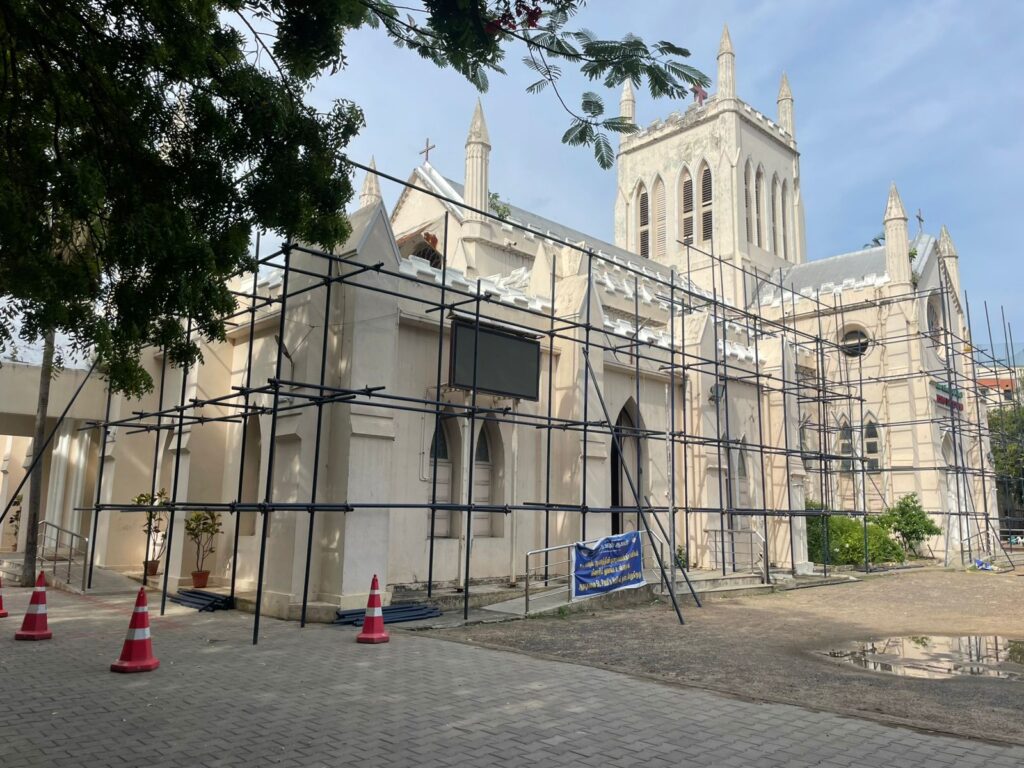
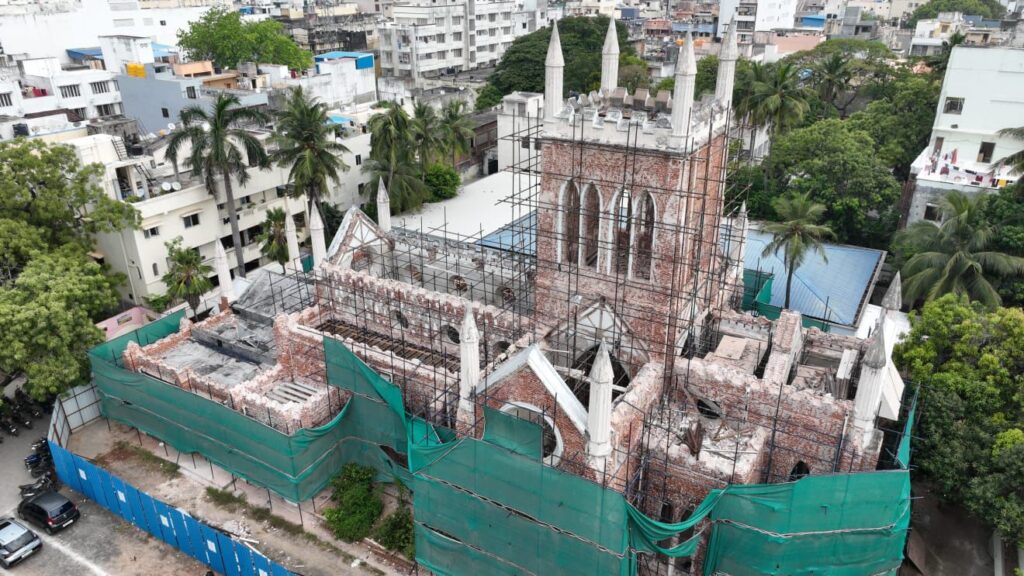
Financial and Administrative Support The project was made possible through a unique blend of congregational giving and government support. The church members raised over Rs. 1 Crore through dedicated fundraising efforts. A landmark moment occurred in February 2024 when the Tamil Nadu Government announced a grant of Rs. 4,02,15,000/- for the church’s restoration.
Key figures facilitating this support included:
- Mr Peter Alphonse (former Chairman of the Minority Commission)
- Adv. R.C. Paul Kanagaraj, who introduced the leadership to the Minority Commission
- Hon. Gingee Masthan (former Minister for Minorities Welfare) and his secretary, Mr Anbalagan
- Mr Ilango (District Minority Welfare Officer), who efficiently coordinated various government departments, including the TASILDAR and EB
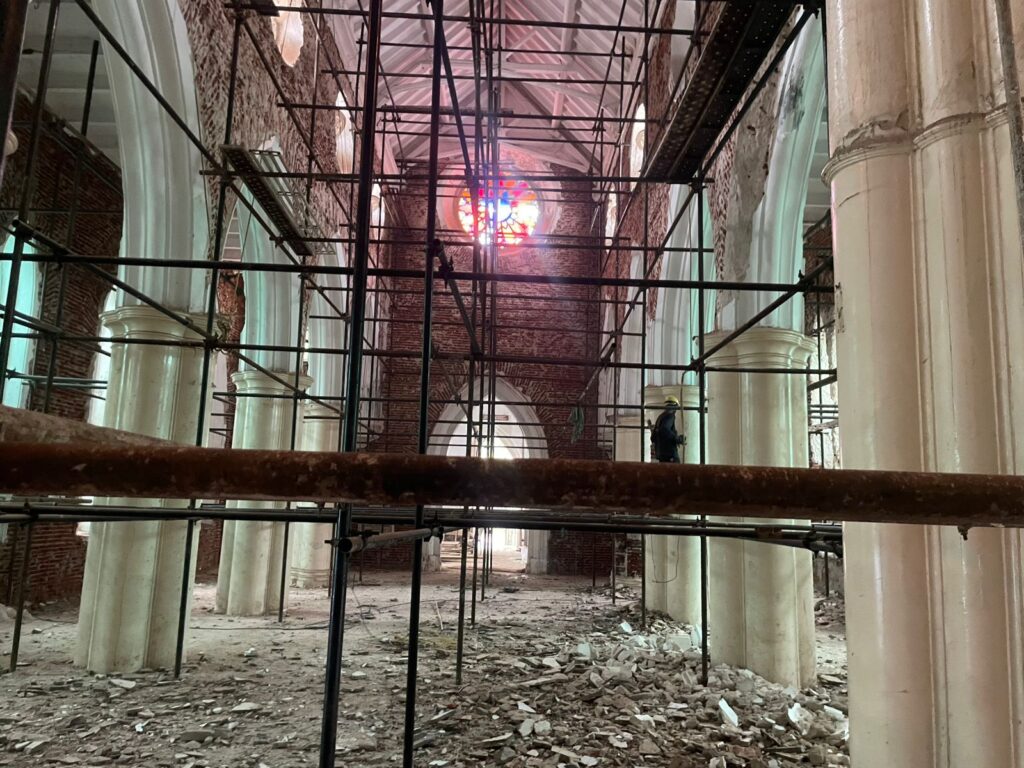
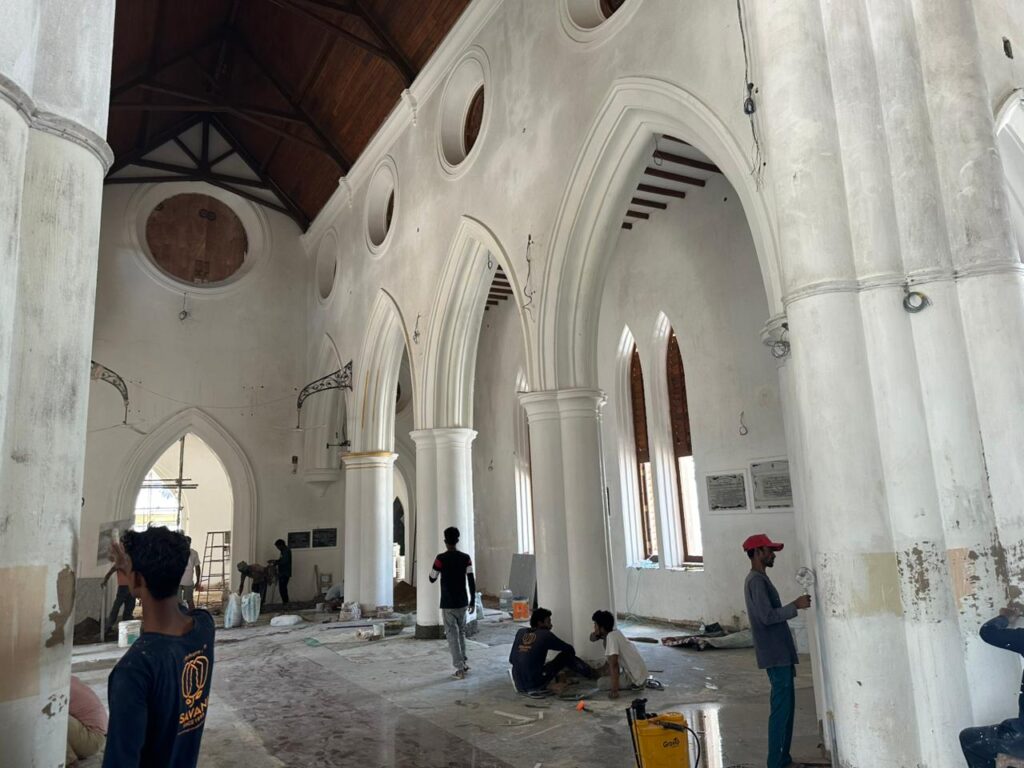
Technical and Heritage Restoration To ensure the 19th-century structure was preserved according to heritage standards, the committee selected Savani Heritage Construction (Mumbai) after visiting various heritage sites across Tamil Nadu.
Before work commenced, the building underwent rigorous Non-Destructive Testing (NDT) to assess the structural integrity of the walls, roof, trusses, and foundation. The findings necessitated extensive repairs:
- Structural Failures: Three out of the four major roof trusses failed safety tests and had to be completely reconstructed and hoisted into place by crane.
- Replacements: All 330 rafters were found to be failing and were replaced with new ones. Four out of eight purlins were also replaced.
- Heritage Details: To maintain the original aesthetic, 22 louvre windows and 22 ventilators were replaced with new versions matching the historical design.
- Masonry: Techniques like grouting and brick consolidation were used to seal gaps and stabilise the walls.
- Grouting: Filling holes/gaps in the building’s bricks.
- Brick Consolidation: Stabilising the bricks on both sides of the building.
- Roof Trusses: Three out of the four large trusses failed tests; they were newly manufactured, brought in, and hoisted by crane.
- Purlins: Four out of eight purlins were newly made after failing tests.
- Rafters: All 330 rafters were replaced as they failed tests.
- Doors: The main front door was made anew, and all other doors were renovated.
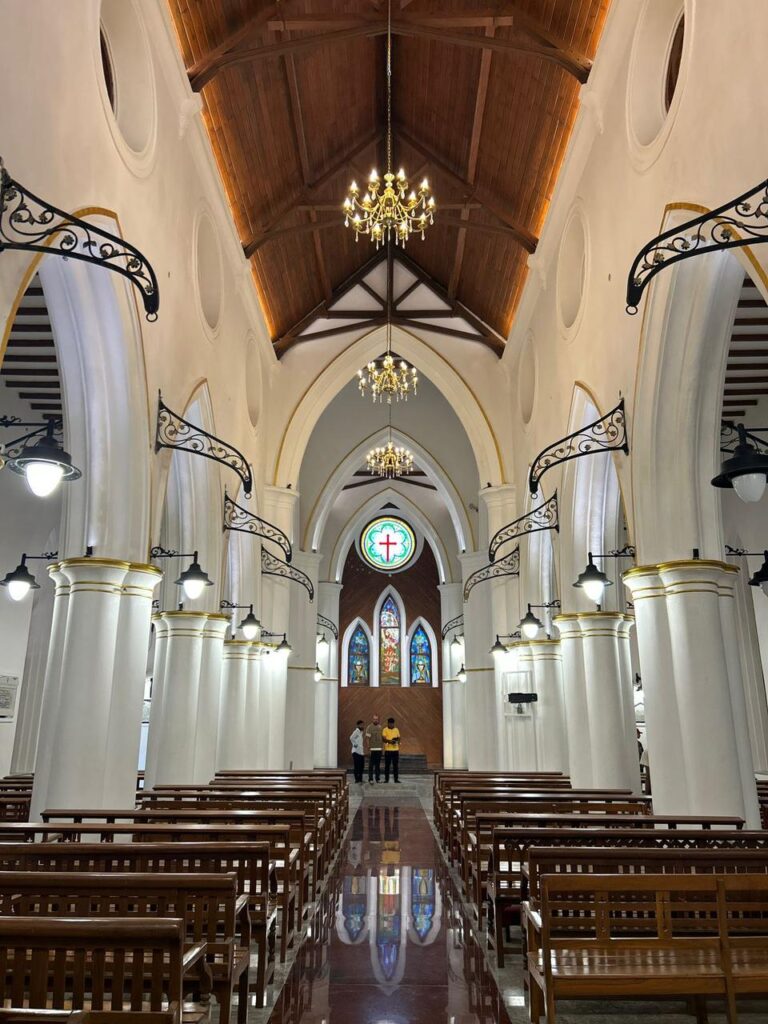
Finally, the restoration culminated in a grand dedication ceremony on April 26, 2026, led by the Rt. Rev. A. Paul Francis Ravichandran, Bishop of the Madras Diocese. The project stands as a testament to the collaborative efforts of the congregation, heritage experts, and the state government to preserve a vital piece of Chennai’s religious and architectural history.
Download the Coffee Book and Watch the Short Film
The full Restoration Journey Report (in Tamil) and Short Film Journey